Mastering Long Arm Quilting: Tips and Techniques
Updated: Mar 26
January 15, 2026
Long arm quilting is a craft that combines artistry with precision, allowing quilters to create stunning, intricate designs on larger fabric pieces. Whether you are a seasoned quilter or just starting, mastering long arm quilting can elevate your projects and provide a satisfying creative outlet. In this post, we will explore essential tips and techniques to help you become proficient in long arm quilting, ensuring your quilts are not only beautiful but also durable.
Understanding Long Arm Quilting
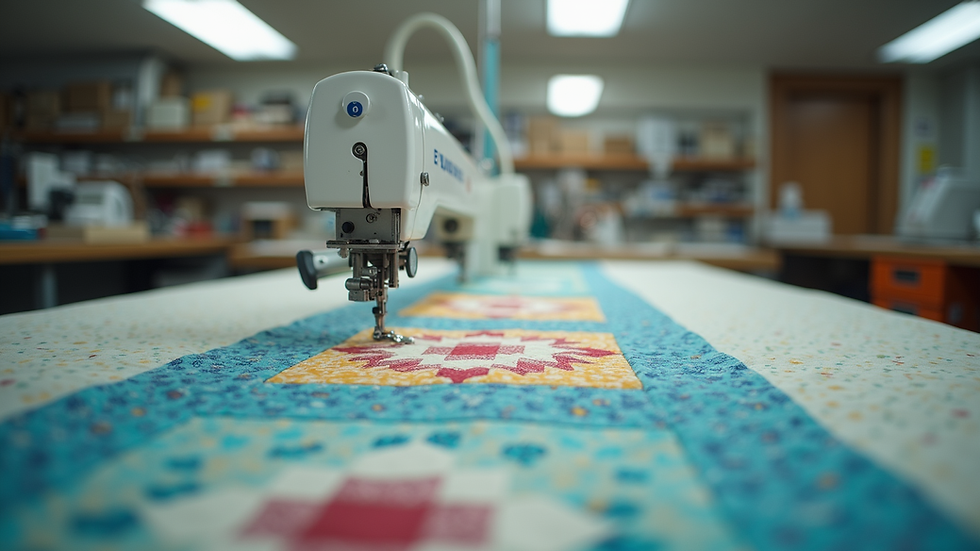
Long arm quilting involves using a specialized sewing machine that is designed for quilting large pieces of fabric. Unlike traditional sewing machines, long arm machines have a larger throat space, allowing for more extensive movement and the ability to quilt larger quilts without needing to maneuver the fabric manually.
The Benefits of Long Arm Quilting
Efficiency: Long arm machines can quilt faster than standard machines, making them ideal for larger projects.
Precision: The design capabilities allow for intricate patterns that can be difficult to achieve with a standard sewing machine.
Versatility: Long arm quilting can accommodate various fabric types and thicknesses, making it suitable for different quilting styles.
Choosing the Right Long Arm Machine
Selecting the right long arm quilting machine is crucial for your quilting journey. Here are some factors to consider:
Size and Space
Consider the size of the quilts you plan to make. If you often work with larger quilts, a machine with a longer throat space will be beneficial. Additionally, ensure you have enough space in your sewing area to accommodate the machine and your quilting setup.
Features
Look for features that suit your quilting style. Some machines come with built-in stitch regulators, which help maintain consistent stitch length, while others offer various quilting patterns and designs.
Budget
Long arm quilting machines can vary significantly in price. Determine your budget and explore options within that range. Remember, investing in a quality machine can enhance your quilting experience and results.
Essential Techniques for Long Arm Quilting
Once you have your machine set up, it's time to dive into the techniques that will help you master long arm quilting.
1. Preparing Your Quilt Sandwich
Before you start quilting, you need to prepare your quilt sandwich, which consists of the quilt top, batting, and backing fabric. Here’s how to do it:
Choose Quality Materials: Select high-quality fabric and batting to ensure durability and a professional finish.
Layering: Lay the backing fabric right side down, followed by the batting, and finally the quilt top right side up. Smooth out any wrinkles as you layer.
Basting: Use safety pins or basting spray to secure the layers together. This prevents shifting during quilting.
2. Mastering Machine Settings
Understanding your machine's settings is vital for achieving the best results. Here are some key settings to adjust:
Stitch Length: A longer stitch length is ideal for quilting, typically between 8-12 stitches per inch.
Tension: Adjust the tension according to the fabric and batting you are using. Test on a scrap piece to ensure the tension is balanced.
Speed: Start at a slower speed until you feel comfortable with the machine's movement and your control over the fabric.
3. Practicing Free-Motion Quilting
Free-motion quilting allows you to create unique designs and patterns. Here are some tips to get started:
Practice on Scraps: Use scrap fabric to practice different designs and get comfortable with the machine's movement.
Use a Quilting Foot: A free-motion quilting foot will help you maneuver the fabric more easily and create intricate designs.
Start Simple: Begin with basic shapes and gradually progress to more complex patterns as your confidence grows.
4. Utilizing Rulers and Templates
Rulers and templates can help you achieve precise lines and shapes in your quilting. Here’s how to use them effectively:
Choose the Right Ruler: Select a ruler that is compatible with your machine and the designs you want to create.
Secure the Ruler: Use a ruler foot to keep the ruler in place while you quilt along its edge.
Practice: Like free-motion quilting, practice using rulers on scrap fabric to build your skills.
Troubleshooting Common Issues
Even experienced quilters encounter challenges. Here are some common issues and how to resolve them:
Thread Breakage
If your thread keeps breaking, check the following:
Tension Settings: Ensure the tension is not too tight.
Thread Quality: Use high-quality thread that is suitable for your machine.
Needle Size: Make sure you are using the correct needle size for your fabric and thread.
Uneven Stitches
Uneven stitches can be frustrating. To fix this issue:
Speed Control: Maintain a consistent speed while quilting.
Fabric Handling: Ensure you are guiding the fabric evenly without pulling or pushing too hard.
Quilting Bumps
Bumps can occur if the layers shift during quilting. To prevent this:
Baste Securely: Make sure your layers are well-basted before starting.
Use a Walking Foot: For straight-line quilting, a walking foot can help feed the layers evenly.
Finishing Your Quilt
Once you have completed the quilting, it’s time to finish your quilt. Here are the final steps:
Trimming
Trim any excess batting and backing fabric to ensure a clean edge. Use a rotary cutter and ruler for straight lines.
Binding
Binding gives your quilt a polished look. Here’s how to bind your quilt:
Cut Binding Strips: Cut strips of fabric, typically 2.5 inches wide, and sew them together to create a long strip.
Attach the Binding: Sew the binding to the front of the quilt, then fold it over to the back and hand-stitch or machine-stitch it in place.
Labeling
Don’t forget to label your quilt! Adding a label with your name, date, and any special details adds a personal touch and preserves the quilt's history.
Conclusion
Mastering long arm quilting takes practice, patience, and a willingness to learn. By understanding your machine, honing your techniques, and troubleshooting common issues, you can create beautiful quilts that showcase your unique style. Remember, every quilt is a journey, and with each project, you will grow as a quilter. So gather your materials, set up your long arm machine, and start quilting today!
Call to Action
Ready to take your quilting skills to the next level? Join a local quilting group or take an online class to connect with fellow quilters and share tips and techniques. Happy quilting!


Comments